Wave Makers: Blue Economy Employer Forum

Wave Makers is a collaboration between the Cape Cod Blue Economy Foundation and Center for Community and Professional Education (CCAPE) to build on the challenges and opportunities experienced by Blue Economy employers, and which align with the Cape Cod Comprehensive Economic Development Strategy and related initiatives.

Overview

In October 2025, Wave Maker Forum attendees detailed four key areas of focus: workforce, housing, environment, and culture. Scroll down the page to learn more about these key areas. Each section includes an overview of small business challenges, and opportunities, followed by a summary of the most recent session's notes as well as resources referencing active Wave Makers and partners across the Cape, Martha's Vineyard, Nantucket, and Plymouth.

The Cape’s blue economy thrives when people can live, work, and innovate here year-round.  The path forward requires regional collaboration, workforce investment, and housing reform — supported by clear communication and community engagement.

The February 2026 forum confirmed a strong and encouraging takeaway:employer priorities are highly aligned with initiatives already underway through the Comprehensive Economic Development Strategy (CEDS).

Rather than uncovering competing agendas, discussions reinforced that the region is positioned to accelerate progress by tightening coordination, improving communication, and focusing on a small number of shared actions. Across all four breakout topics, participants demonstrated a clear willingness to engage, not only identifying challenges but offering concrete ways their organizations can contribute.

Key Takeaways (Across All Topics)

  1. Alignment is Real — Now Execution Matters. Employers consistently recognized existing programs, partnerships, and policy efforts that support Blue Economy growth. The opportunity is no longer discovery; it is integration and scale.
  2. Workforce and Housing Remain the Primary Constraints. While progress is visible, workforce availability and attainable housing continue to define the region’s economic ceiling.
  3. Employers Want to Be Active Partners
    Participants signaled strong interest in:
    1. Hosting interns and apprentices
    2. Co-designing training pathways
    3. Sharing data
    4. Participating in regional planning
    5. Engaging in policy education

      This represents a major shift from stakeholder feedback → shared ownership.

  4. Regional Thinking Must Replace Local Silos. A recurring theme across discussions was the need to operate more regionally - particularly in housing, infrastructure, environmental planning, and municipal collaboration.

The Wave Makers Forum is a collaboration between the Cape Cod Blue Economy Foundation and the Center for Community and Professional Education (CCAPE) at Cape Cod Community College. For more information on Wave Makers, please contact Katy Acheson at katy@capecodchamber.org. To learn about other employer forums and/or propose new ideas, visit CCape Employer Forums.

4 KEY FOCUS AREAS

Waterworks 2023 160 cca9291fa2a5cc26f43cecda1e04648a 31025ed079b632c51bade5e768cec621

Labor and Workforce Development

Challenges

  • Severe shortage of affordable and workforce housing.
  • Seasonal employment cycles and wage gaps limit retention.
  • Difficulty attracting and keeping skilled workers.
  • Limited training, certification, and testing centers on-Cape.

Opportunities

  • Establish regional training centers and certification pathways (e.g. HVAC, wastewater, solar, aquaculture).
  • Explore seasonal dorms, extended-stay housing, and transitional workforce options.
  • Expand internships, apprenticeships, and retraining for youth and late-career entrants.
  • Offer subsidized training and year-round employment incentives.

Strong Alignment

During our February 2026 forum, participants highlighted multiple training partnerships already advancing workforce goals, including collaborations with workforce boards, technical schools, adult education providers, and apprenticeship programs. Early career awareness efforts, particularly at the middle and high school levels, were viewed as critical to building long-term talent pipelines.

Emerging programs in marine technology, HVAC, wastewater, and green building illustrate a growing ecosystem capable of supporting Blue Economy workforce needs.

Key Gaps

Despite this progress, several friction points persist:

  • Administrative burden associated with apprenticeship grants
  • Limited visibility into internship and on-the-job training opportunities
  • Urgent demand for certified wastewater professionals
  • Anticipated workforce shortages tied to infrastructure expansion
  • Need for reskilling as automation and AI reshape management roles

Participants emphasized that training pathways must include clear entry points and stackable credentials.

Coordinated Opportunity

The group identified a significant opportunity to centralize awareness of training and career pathways, helping students, job seekers, and employers navigate options more easily.

There was also strong support for elevating the narrative around trade careers, particularly highlighting earning potential and career mobility.

Employer Contributions

  • Employers expressed readiness to:
  • Help design training models
  • Provide guest instruction and site visits
  • Expand job shadowing
  • Partner on career exploration events

Signal: Workforce is not just a policy issue - it is becoming a co-produced system.
Data Cape Cod by the Cape Cod Commission distills information into digestible segments like this page with information about Labor Force and Earnings https://datacapecod.org/pf/labor-force-and-earnings/

The Massachusetts Executive Office of Labor and Workforce Development support individual businesses through job boards, apprenticeship programs, training programs, and tax credits. https://www.mass.gov/orgs/executive-office-of-labor-and-workforce-development

Housing graphic

Housing and Infrastructure

Challenges

  • Severe shortage of affordable and workforce housing.

Opportunities

  • Regional workforce housing and zoning reform for mixed-use development.
  • Explore seasonal dorms, extended-stay housing, and transitional workforce options.

Strong Alignment

During our February 2026 Forum, participants recognized momentum in several areas, including accessory dwelling units (ADUs), wastewater investments, transportation services, and seasonal housing models.

These initiatives are already supporting workforce stability — but not yet at the scale required.

Key Gaps

Housing availability emerged as one of the most urgent economic threats to regional growth.

Primary concerns included:

  • Whether “affordable” housing is truly affordable relative to wages
  • Insufficient year-round and seasonal housing stock
  • Employees being priced off-Cape
  • Community resistance to development
  • Workforce dependence on employer-linked housing

Participants noted that geographic realities often make the region feel larger than expected, intensifying transportation challenges.

Coordinated Opportunity

Employers see a meaningful role in supporting:

  • Developer partnerships
  • Community education around housing policy
  • Advocacy for state support
  • Transportation solutions such as shuttles and carpools

The conversation suggested that progress will depend as much on public understanding as on policy.

Employer Contributions

Organizations expressed willingness to collaborate with municipalities and developers while engaging in broader community dialogue.

Signal: Employers are increasingly prepared to participate in housing solutions - not just react to them.

Housing to Protect Cape Cod is a coalition formed by Cape Cod Chamber of Commerce, Housing Assistance Corporation of Cape Cod, and Home Builders & Remodelers Association of Cape Cod. The mission is to empower our friends, family and neighbors to speak up for housing in towns across the region. https://housingtoprotectcapecod.org/

Data Cape Cod provides easy to understand graphics and data that demonstrates the housing characteristics in Barnstable County. https://datacapecod.org/pf/housing-characteristics/

Caitlin group photo

Environmental Resilience

Challenges

  • Wastewater, coastal erosion, and climate impacts on fisheries and waterfronts.
  • Fragmented municipal approaches; need for unified coastal management.

Opportunities

  • Coordinate wastewater, shoreline, and green infrastructure upgrades.
  • Promote environmental education for students, homeowners, and businesses.
  • Support renewable energy and water-tech workforce pipelines.

Strong Alignment

During our February 2026 Forum, discussions reinforced that environmental health and economic vitality are inseparable within the Blue Economy.

Participants pointed to:

  • Aquaculture expansion
  • Sewer investments
  • Water quality initiatives

as examples where environmental protection directly supports job creation.

Key Gaps

Challenges remain around:

  • Complex stormwater permitting
  • Funding constraints
  • High costs of advanced environmental systems
  • Regulatory barriers affecting housing expansion

These pressures can slow both business growth and resilience efforts.

Coordinated Opportunity

The group emphasized the value of broader stakeholder engagement, including state and federal partners, alongside stronger regional collaboration.

Workforce development again surfaced as a cross-cutting solution, particularly in wastewater treatment and environmental operations.

Employer Contributions

Participants encouraged:

  • Greater civic participation (e.g., town meetings)
  • Expansion of regional voices
  • Continued education for voters and students

Signal: Environmental resilience is increasingly viewed as a workforce and economic strategy - not solely a regulatory requirement.

"Association to Preserve Cape Cod and Housing Assistance Corporation have undertaken a mapping project" called Grow Smart Cape Cod, "that uses the best available existing data and GIS technology to identify priority areas for natural resource protection and priority areas for affordable moderate-density housing development." https://growsmartcapecod.org/

The Cape Cod Commission published a Climate Action Plan with the intended purposes of improving "the region’s resilience to climate hazards; and [mitigating] climate change on Cape Cod through reducing net regional greenhouse gas emissions in support of the framework and targets established by the Commonwealth." See an overview or download the full plan. https://www.capecodcommission.org/our-work/climate-action-plan/

Arms3

Socio-Cultural and Community

Challenges

  • Childcare shortages, high cost of living, and low wages.
  • Cultural and language barriers reducing inclusion.
  • Low awareness of blue economy career pathways.

Opportunities

  • Formalize regional coordination across towns, educators, and industry.
  • Launch a “Blue Economy Awareness Campaign” to promote jobs and innovation.
  • Strengthen public-private partnerships and policy advocacy.

Strong Alignment

During our February 2026 Forum, participants acknowledged that the region already benefits from numerous forums, expert convenings, and professional networks.

The foundation for collaboration exists.

Key Gaps

However, attendees were candid in noting that:

  • Conversations do not always translate into action
  • Efforts can feel fragmented across municipalities
  • Data and plans are not consistently shared
  • Town-level independence can limit regional progress

Coordinated Opportunity

There was strong interest in exploring:

  • Regular regional municipal forums
  • Increased business participation on advisory boards
  • More transparent communication on initiatives and outcomes
  • Expanded data sharing

Participants emphasized that improved coordination does not necessarily require new structures - often just clearer channels.

Employer Contributions

Organizations committed to:

  • Communicating plans more openly
  • Hosting discussions and panels
  • Sharing data
  • Participating in regional convenings

Signal: The region is ready to move from networking → structured coordination.

Cape Cod Chamber of Commerce's Childcare Taskforce created a Child Care Toolkit to provide tangible options to employers who are eager to support their working parents’ childcare needs. https://www.capecodchamber.org/your-chamber/public-policy/policy-priorities/housing-childcare-and-livability/childcare-on-cape-cod/

The Brazilian Resource Center work with the Cape Cod Commercial Fishermen's Alliance to provide multi-language fishermen training courses including boat safety and first aid. https://brazilianresourcecenter.org/our-programs/

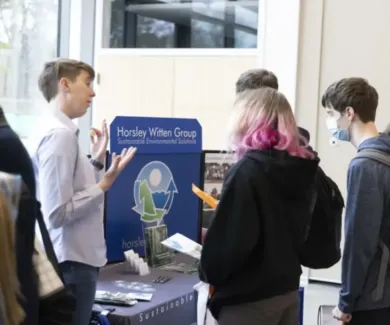
WaterWORKS is a Blue Economy and STEM Career Exploration Day for Cape & Islands high school students. 400 students and 50+ organizations are invited to share career journeys through one-on-one conversations, interactive exhibits, and panel speaker sessions. https://bluecapecod.org/events/waterworks

1844 Big Blue 2025 Conf 235

Economic Sustainability

Challenges

  • Small business growth constrained by startup costs and capital access.
  • Overreliance on tourism; need for economic diversification.

Coastal Community Capital is a community development financial institution. Since 1995, Coastal has supported Massachusetts businesses, providing millions of dollars in loans and creating and retaining over 5,000 jobs. Coastal lends directly, and if necessary, partners with the SBA providing up to 25-year, low, fixed interest rates for real estate acquisition and debt refi. Loans range from $5,000 to $20,000,000. Coastal also promotes economic development and business growth via free business mentoring and ongoing business workshops. https://www.coastalcommunitycapital.org/

MassHire Cape & Islands Workforce Board's Cape and Islands Regional Blueprint "provides an overview of regional workforce needs and serves as a useful resource for local employers, educators, and economic development partners in helping to reach our shared goals." Pages 17 through 22 cover industry and occupation data relevant to conversations brought up at past Wave Maker Forums. https://masshire-capeandislandswb.com/wp-content/uploads/2023/11/Blueprint-June-30-2023-Revised-10-23-1.pdf

Recommendations for an Actionable Roadmap

Good News:
Employer priorities strongly align with regional economic strategies.

The Risk:
Without tighter coordination, progress may remain fragmented.

The Opportunity:
Employers are ready to shift from stakeholders to co-creators.

Focus on a small number of shared priorities and maintain employer engagement

Immediate Leadership Focus:

  • Reinforce regional collaboration
  • Prioritize workforce + housing
  • Assign ownership to shared initiatives
  • Demonstrate early wins

Near-Term (0–12 Months)

  • Highest Impact / Most Achievable
    • Create a centralized hub for training and career pathways
    • Expand employer participation in internships and apprenticeships
    • Improve communication across existing initiatives
    • Convene regular regional coordination forums
  • Mid-Term (1–3 Years)
    • Advance workforce housing partnerships
    • Align environmental infrastructure projects with talent pipelines
    • Scale certification programs tied to regional demand
    • Strengthen employer advisory structures
  • Long-Term (3–5 Years)
    • Establish fully integrated workforce ecosystems
    • Expand attainable housing supply
    • Normalize regional planning approaches
    • Position the Cape as a national Blue Economy leader

Guiding Principle:

Coordinate before creating. Scale before reinventing.

ADDITIONAL NEXT STEPS

  • Convene a Regional Blue Economy Action Coalition (Wave Makers) to align on priority “Initiatives in Motion” (ex.  CEDS housing, training, infrastructure initiatives) for businesses to understand impacts and engage and guide locally.
  • Develop joint funding proposals to expand regional training facilities and programs/certifications along with partnering with businesses to expand internships, apprenticeships, and retraining for youth and late-career entrants
  • Create a Blue Economy Awareness Campaign and use shared communications platforms for data, job boards, and blue economy storytelling.

Join the Wave Makers

Join the ongoing conversation and work around blue economy employer issues on Cape Cod. Our next session is Friday, February 13 at Cape Cod Community College. More details at the link.

Post a Job or Internship

Submit your Blue Economy related work opportunities below. Submissions will be approved by Cape Cod Blue Economy Foundation staff prior to appearing on the jobs page. Jobs will be live for 60 days. Jobs may be resubmitted if still available after 60 days of previous submission.

Have ideas or questions? Reach out using the contact form below or email katy@capecodchamber.org